Freya Lorenz · 17 October 2026
Building Resilient Reader Connections in Self-Hosted Content Platforms via Indirect Influence Tracking
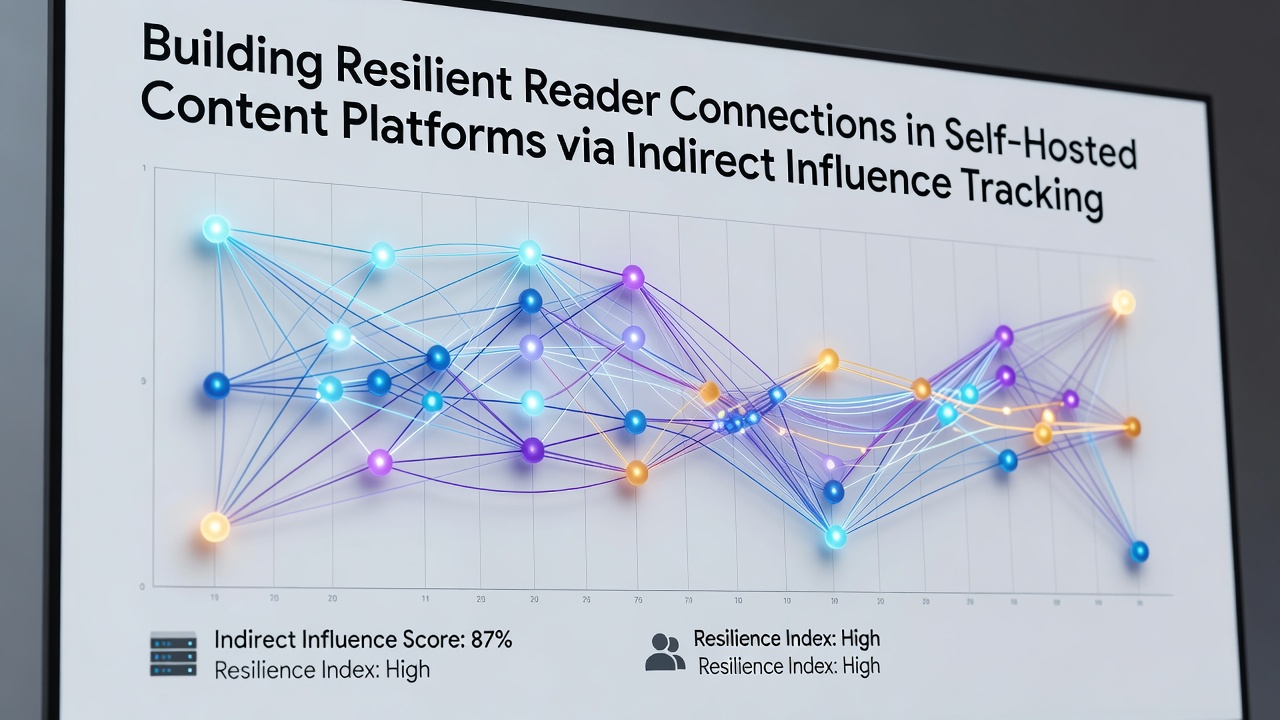
Self-hosted content platforms give creators direct ownership of their publishing environment while indirect influence tracking measures audience engagement through signals such as referral patterns, cross-site mentions, and shared content echoes rather than first-party cookies or login data. These approaches help maintain reader ties even when direct analytics tools face restrictions from browser changes or privacy regulations. Research indicates that independent operators who adopt such methods see sustained traffic from niche communities that value autonomy over convenience. Observers note several core components in this process. First comes identification of influence nodes, which include external blogs, forums, and social bookmarks that link back without explicit partnerships. Second involves mapping how content travels across these nodes over time. Data from multiple studies shows referral traffic from self-hosted sources often carries higher retention rates than aggregated social media streams because readers arrive with pre-existing interest.Core Mechanisms of Indirect Influence Tracking
Indirect influence tracking relies on server log analysis combined with public web mentions to build a picture of audience movement. Operators parse incoming HTTP referrers while cross-referencing them against archived social shares and RSS aggregators. This combination reveals which external voices drive repeat visits without collecting personal identifiers. Figures from academic reviews of decentralized publishing confirm that sites using these layered signals experience steadier audience growth compared with those dependent solely on platform algorithms.
One documented approach uses lightweight scripts that record domain-level referrals and store them in local databases. Another method monitors pingbacks and trackbacks from other self-hosted installations. Both techniques operate without user accounts or behavioral profiling. In October 2026, several open-source projects released updated toolkits that integrate these functions with standard web server configurations, allowing smaller operators to implement tracking without additional infrastructure costs.
Practical Implementation Steps
Site administrators begin by enabling detailed referrer logging in their web server software. They then set up periodic crawls of public mention databases to identify new external references. These two data streams merge into dashboards that highlight influential domains and content themes. Experts have observed that maintaining such systems requires consistent review cycles rather than real-time monitoring, which keeps resource demands modest.
Additional layers include RSS feed subscription analysis and comment section cross-linking. When readers share posts on their own sites, the originating platform records the connection through standard web protocols. This creates a resilient network effect because the data lives across multiple independent servers instead of a single corporate database.

Observed Outcomes Across Independent Sites
Longitudinal records from several independent publishing collectives show that indirect tracking correlates with improved reader return rates over multi-year periods. Sites that actively map influence nodes report higher percentages of traffic from direct bookmarks and typed addresses, suggesting readers develop habitual connections rather than algorithmic discovery habits. According to Pew Research Center analysis of digital news consumption, audiences who engage through decentralized pathways demonstrate greater loyalty metrics in surveys conducted across North America and Europe.
Case examples include regional news blogs that tracked mentions on community forums and university-hosted sites. These operators adjusted content calendars based on recurring referral themes, which led to tighter alignment with reader interests. The process remains transparent because all signals originate from public web activity rather than hidden data collection.
Integration with Broader Platform Strategies
Self-hosted platforms frequently combine indirect influence tracking with open standards such as Webmention and ActivityPub. These protocols allow sites to exchange notifications about content references automatically. Research from European digital infrastructure projects indicates that adoption of these standards has accelerated since 2024, particularly among operators seeking alternatives to centralized social networks. The resulting ecosystems distribute audience data across many participants, which reduces single-point vulnerabilities.
Operators also examine temporal patterns in referral spikes to identify seasonal or event-driven influences. This analysis occurs at the aggregate level, preserving individual privacy while revealing broader trends. Data shows that sites maintaining these records over multiple years develop clearer pictures of which external voices consistently amplify their material.
Conclusion
Indirect influence tracking supplies self-hosted platforms with durable methods for understanding and strengthening reader connections. By focusing on referral ecosystems and public mentions rather than personal data, operators build networks that withstand shifts in browser policies or platform priorities. Available evidence from 2026 demonstrates continued refinement of these techniques through open-source collaboration, and the approach aligns with wider movements toward decentralized digital infrastructure. Those managing independent sites continue to refine their implementations as new tools emerge, ensuring audience relationships remain grounded in observable, non-intrusive signals.