Frankie Meier · 5 September 2026
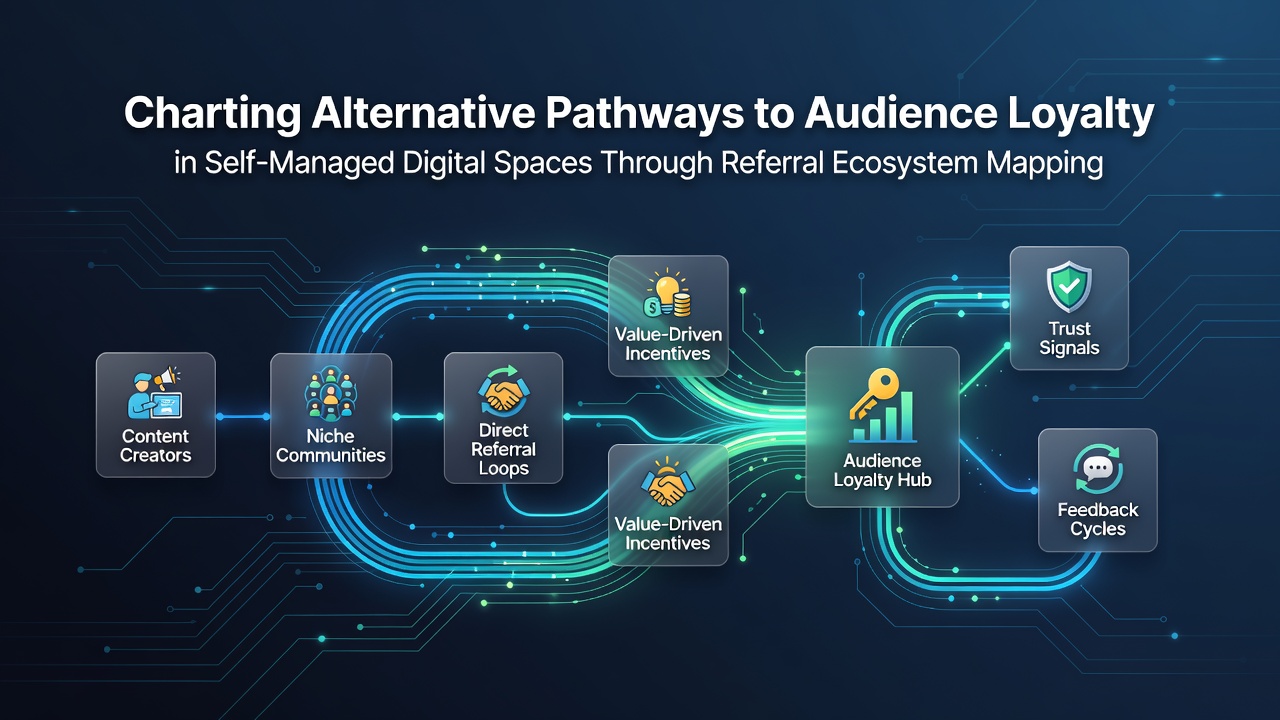
Charting Alternative Pathways to Audience Loyalty in Self-Managed Digital Spaces Through Referral Ecosystem Mapping
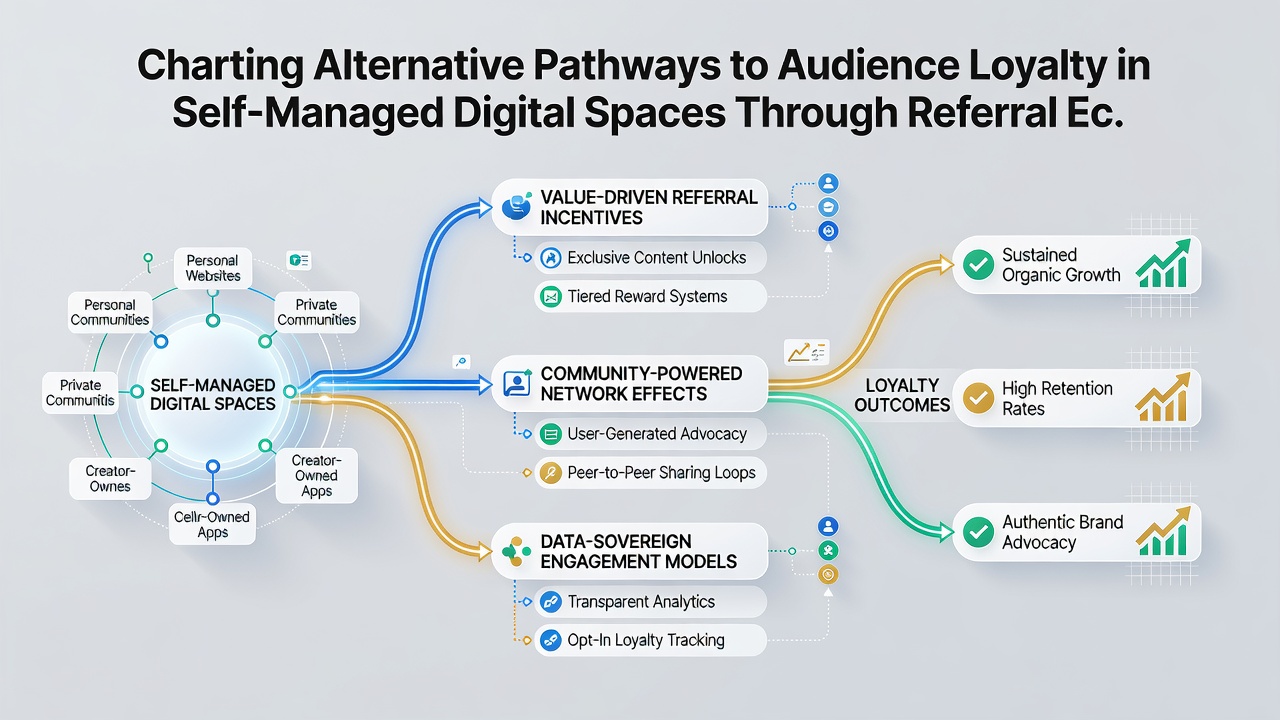
Referral ecosystem mapping identifies connections between users who bring others into self-managed digital spaces such as independent websites, private forums, and custom apps; this process tracks how recommendations travel through networks and builds sustained engagement without reliance on external platforms. Data from industry reports shows that structured referral systems increase retention rates by directing new participants through trusted pathways rather than broad advertising channels.
Observers note that self-managed spaces allow owners to control data flows and incentive structures directly, whereas mapping reveals clusters where loyal users consistently introduce others with similar interests. Studies conducted by research institutions indicate that these clusters often form around shared content themes or tool integrations, creating measurable patterns in participation duration and repeat visits.
Defining Referral Ecosystem Mapping in Digital Contexts
Referral ecosystem mapping compiles nodes representing individual users or groups alongside edges that denote recommendation actions, such as shared links or invitation codes, within closed digital environments. Researchers at academic centers have documented how these maps highlight high-value connectors who generate disproportionate inflows of engaged participants over time. In practice, the method combines user behavior logs with survey responses to assign weights to different referral sources based on conversion strength and long-term activity levels.
One analysis of community platforms revealed that mapped ecosystems frequently show seasonal spikes in referral activity during content launches or feature updates, allowing operators to time outreach efforts accordingly. Figures from digital marketing studies confirm that participants acquired through mapped referrals demonstrate higher lifetime value compared to those arriving via search or paid channels alone.
Building Loyalty Through Structured Referral Pathways
Loyalty in self-managed spaces emerges when referral systems reward both the referrer and the new arrival with access privileges or exclusive content, and mapping clarifies which incentives produce the strongest ongoing bonds. Data indicates that tiered reward structures, where repeated successful referrals unlock additional benefits, correlate with extended membership periods across various independent sites. Those who have examined these systems report that transparency in how referrals are tracked reduces drop-off rates because users understand the process clearly.
Take one case where operators of a niche knowledge-sharing site implemented mapping tools to visualize referral flows; the resulting adjustments to invitation mechanics led to a documented rise in multi-month retention among referred users. Evidence suggests that integrating referral tracking with existing analytics platforms allows for real-time adjustments without disrupting community norms.
Implementation Steps and Data Integration Practices
Operators begin by collecting anonymized referral data from sign-up forms and activity logs, then apply network analysis techniques to identify central figures and peripheral contributors within the ecosystem. According to findings from European research collaborations, combining this data with demographic details produces more accurate predictions of which referral routes sustain loyalty beyond the initial onboarding phase. Mapping software tools now support automated updates that reflect shifts in user behavior as new connections form.
But here's the thing: successful implementations often incorporate feedback loops where referred users report their discovery path, refining the map over successive cycles. Reports from North American digital economy analyses show that spaces using iterative mapping achieve steadier growth in active user bases compared to those relying on static promotion methods. In September 2026, updated datasets from international trade groups highlighted continued expansion of these practices among independent operators seeking diversified traffic sources.
Comparative Outcomes Across Different Digital Environments
Comparative reviews of mapped versus unmapped referral systems demonstrate that structured approaches yield more predictable audience composition and reduced churn in self-managed settings. Academic papers from Australian universities have examined how cultural factors influence referral density, finding denser networks in topic-specific communities that emphasize mutual support. Operators gain visibility into underutilized segments by overlaying referral data with engagement metrics such as comment frequency or content downloads.
Yet patterns emerge consistently across regions where mapped ecosystems support cross-promotion between related spaces, extending loyalty beyond single sites. Industry organizations tracking digital adoption note that these interconnections strengthen overall resilience against platform policy changes or algorithm shifts on larger networks.
Conclusion
Referral ecosystem mapping provides a factual framework for tracing and strengthening audience connections in self-managed digital spaces, supported by observable data on retention and participation patterns. Continued application of these methods across varied environments supplies operators with actionable insights drawn from actual user networks rather than generalized assumptions. As digital landscapes evolve, the practice remains grounded in measurable referral flows that inform targeted development of loyalty mechanisms.